

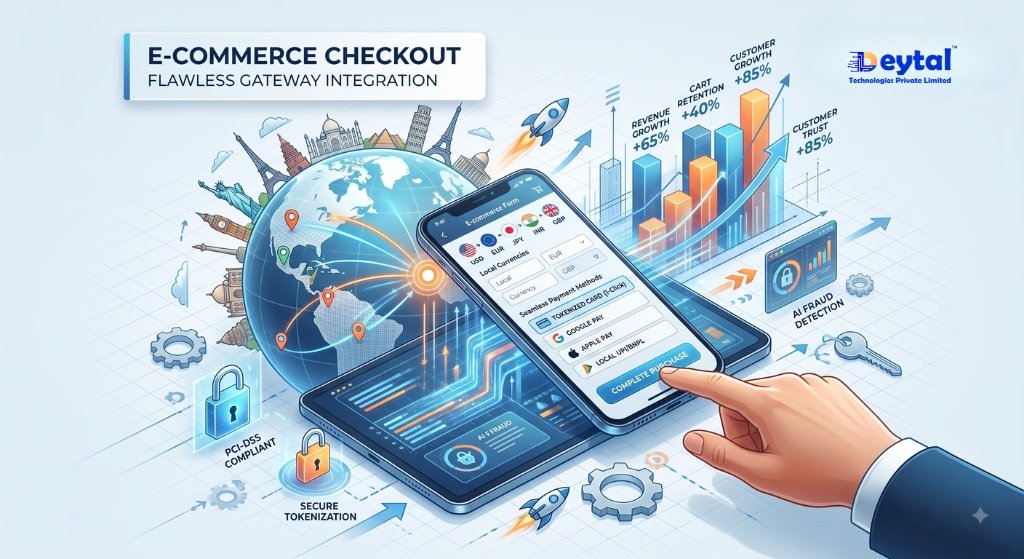
In modern e-commerce, the final checkout step determines whether you gain a loyal customer or lose a high-intent sale. Research shows that over 70% of digital shopping carts are abandoned before purchase completion. While product quality and marketing attract visitors, friction during payment processing such as currency mismatches, security concerns, or clunky gateway redirects is the primary cause of lost revenue.
Optimizing your transaction architecture turns payment processing from a simple utility into a powerful conversion driver.
The Hidden Bottlenecks in Traditional Checkout Flows
Standard, poorly configured payment setups create invisible hurdles that drive potential buyers away:
- Forced External Redirects: Sending users off-site to unfamiliar third-party checkout screens breaks trust and increases drop-offs.
- Limited Local Payment Methods: Modern consumers demand diverse options, including digital wallets (Apple Pay, Google Pay), instant UPI, and Buy Now Pay Later (BNPL) services alongside traditional credit cards.
- Lack of Multi-Currency & Geo-Pricing: International buyers frequently abandon carts if prices are not displayed in their native currency or if unexpected foreign transaction fees appear at checkout.
- False Fraud Declines: Overly rigid fraud detection algorithms frequently block legitimate high-value customers without clear error messaging.
Payment Gateway Architectures Compared
| Feature / Metric | Basic Hosted Redirects | Embedded & Custom API Gateways |
| User Experience (UX) | High friction; redirects to external URLs | Seamless; on-site embedded forms & modal popups |
| Conversion Retention | Prone to 15–25% checkout drop-offs | Maximum retention with instant tokenized processing |
| Multi-Currency Support | Often limited to single-base currency conversion | Dynamic local currency display & automated settlement |
| Security & Compliance | Offloaded entirely to vendor | PCI-DSS compliant via secure tokenization & encrypted APIs |
| Brand Consistency | Vendor-branded checkout screen | 100% custom-branded design matching your site identity |
Strategic Ways to Optimize Checkout Performance
1. Implement Frictionless Tokenization & One-Click Checkout
Secure customer tokenization allows returning customers to buy instantly without re-entering lengthy 16-digit card numbers or billing addresses. Pair this with streamlined workflows built through professional UI/UX Design Services to drastically reduce mobile cart drop-offs.
2. Enable Geo-Targeted Multi-Currency Routing
Integrate smart location detection that displays localized product pricing in the user’s home currency, pairing it with automated backend settlement through global gateways. Implementing this requires robust, scalable infrastructure developed via Custom Software Development Services.
3. Optimize for Mobile Payment Wallets & High-Speed Performance
With mobile commerce driving the majority of online sales, offering single-tap native checkout buttons (Apple Pay, Google Pay, UPI) is non-negotiable. Ensure these payment modules load instantly on mobile devices through modern Mobile App Development Services and responsive web engineering.
4. Build a Secure, Cohesive Digital Funnel
High-converting checkouts work best when paired with targeted traffic acquisition. Aligning your secure payment pathways with data-driven Digital Marketing Services and technical SEO Services guarantees a steady stream of qualified buyers.
Build High-Converting Checkout Systems with Deytal Technologies
A secure, intuitive payment infrastructure is essential for scaling digital revenue. Whether you are running a high-traffic store using tailored WordPress Development Services or a full-scale online storefront powered by custom Website Development Services, Deytal Technologies Pvt. Ltd. specializes in custom payment gateway integrations, multi-currency architectures, and conversion-focused checkout optimization.
Frequently Asked Questions (FAQ)
Q1: How do multiple payment gateways reduce checkout abandonment?
Offering preferred local payment options (wallets, UPI, credit cards) builds trust and ensures buyers are not blocked by a single gateway outage or decline.
Q2: What is PCI-DSS compliance, and why does my business need it?
Payment Card Industry Data Security Standards (PCI-DSS) ensure that customer financial data is handled securely. Modern custom integrations handle this securely using direct tokenization, keeping sensitive card numbers off your local server.
Q3: Can custom payment gateways handle international taxes and cross-border currencies automatically?
Yes. Modern API-based gateway integrations calculate local duties, VAT/GST, and dynamic currency conversions in real-time before the final payment is captured.