

A business website is more than just an online identity. It is a powerful tool for generating leads, building customer trust, and increasing revenue. However, simply having a website is not enough. Businesses need to continuously monitor how their website performs to ensure a smooth user experience.
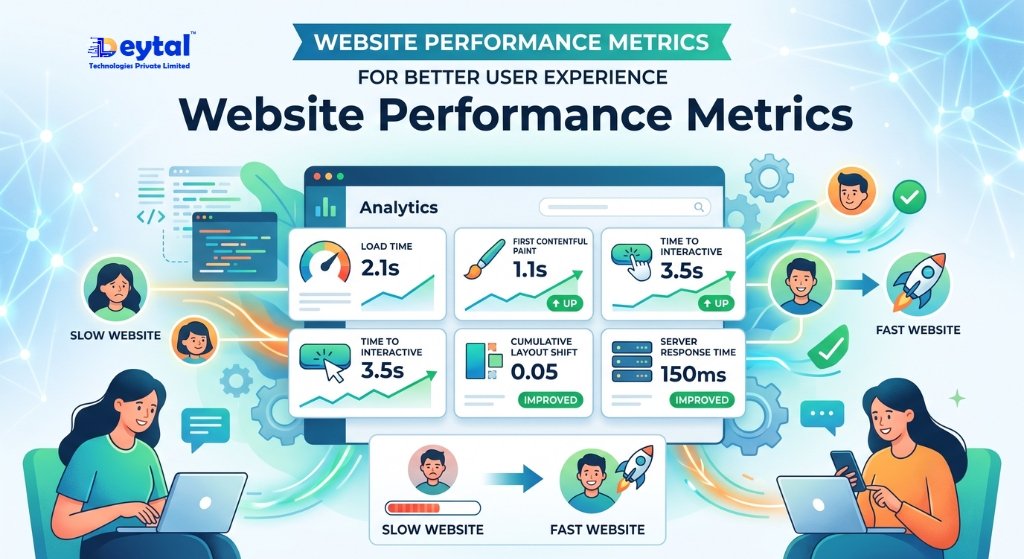
This is where Website Performance Metrics play an important role. These metrics help businesses understand website speed, user behavior, technical issues, and areas that need improvement.
A slow or poorly optimized website can result in lower rankings, fewer customers, and reduced conversions. By tracking the right performance metrics, businesses can improve website quality and maintain a strong digital presence.
What Are Website Performance Metrics?
Website performance metrics are measurable data points that show how efficiently a website works. These metrics help analyze:
Website loading speed
User experience
Technical performance
SEO health
Conversion performance
Regularly monitoring these factors helps businesses identify problems and improve their website performance.
Important Website Performance Metrics Every Business Should Track
- Page Loading Speed
Page speed is one of the most important website performance factors. Users expect websites to load quickly, and slow websites often cause visitors to leave.
Businesses should monitor:
Average page load time
Server response time
Image loading speed
JavaScript and CSS performance
A faster website improves user satisfaction and supports better search engine rankings.
Professional Website Development and Website Maintenance services help businesses optimize website speed and performance.
- Core Web Vitals
Google introduced Core Web Vitals to measure real user experience on websites.
The three main Core Web Vitals include:
Largest Contentful Paint (LCP)
Measures how quickly the main content of a page loads.
A good LCP ensures users can see important information quickly.
Interaction to Next Paint (INP)
Measures how quickly a website responds when users interact with it.
Better responsiveness creates a smoother browsing experience.
Cumulative Layout Shift (CLS)
Measures unexpected movement of page elements while loading.
A stable layout improves usability and customer experience.
- Bounce Rate
Bounce rate shows the percentage of visitors who leave a website without interacting with it.
A high bounce rate may indicate:
Slow loading speed
Poor website design
Irrelevant content
Difficult navigation
Improving website structure and user experience can help reduce bounce rates.
Professional UI/UX Design helps create websites that keep visitors engaged.
- Conversion Rate
A website’s success depends on how effectively it converts visitors into customers.
Conversion rate measures:
Contact form submissions
Product purchases
Service inquiries
Newsletter signups
A high-performing website should not only attract visitors but also encourage them to take action.
Businesses can improve conversions through better landing pages, optimized content, and effective Digital Marketing strategies.
- Mobile Performance
With a large number of users browsing through smartphones, mobile performance is extremely important.
Businesses should check:
Mobile loading speed
Responsive design
Navigation experience
Button accessibility
Image optimization
A mobile-friendly website improves user experience and supports SEO rankings.
- Website Availability and Uptime
Website uptime refers to the amount of time your website remains available to users.
Frequent downtime can:
Reduce customer trust
Affect SEO rankings
Cause business losses
Regular website monitoring helps identify server problems and prevent unexpected downtime.
Professional Website Maintenance ensures your website remains available and secure.
- Traffic and User Behavior
Understanding visitor behavior helps businesses make better decisions.
Important user behavior metrics include:
Number of visitors
Average session duration
Most visited pages
Traffic sources
User journey
These insights help businesses improve content, design, and marketing strategies.
- Website Security Performance
Security is also an important part of website performance.
Businesses should monitor:
SSL certificate status
Security updates
Malware issues
Vulnerability risks
A secure website builds customer trust and protects business information.
Tools to Monitor Website Performance
Businesses can use several tools to analyze website performance:
Google PageSpeed Insights
Google Search Console
Google Analytics
Lighthouse
GTmetrix
These tools provide valuable information about speed, SEO, and technical issues.
How Deytal Technology Pvt. Ltd. Helps Improve Website Performance
Deytal Technology Pvt. Ltd. helps businesses create fast, secure, and SEO-friendly digital solutions.
Our services include:
Website Development
Web Designing
WordPress Development
Website Maintenance
SEO Services
Digital Marketing
Ecommerce Development
Web Application Development
UI/UX Design
With proper optimization and regular monitoring, businesses can improve website performance and achieve better online growth.
Conclusion
Tracking Website Performance Metrics is essential for businesses that want to succeed online in 2026. From website speed and Core Web Vitals to user behavior and security, every metric helps improve website effectiveness.
A well-optimized website provides better user experience, improves SEO rankings, and increases business opportunities.
Regular performance analysis and professional website maintenance help businesses stay competitive in the digital world.