

Traditional monolithic CMS platforms often bind content management and front-end rendering into a single rigid ecosystem. As digital businesses expand across web apps, mobile products, and IoT touchpoints, traditional platforms struggle with slow page speeds, high server overhead, and restrictive design templates.
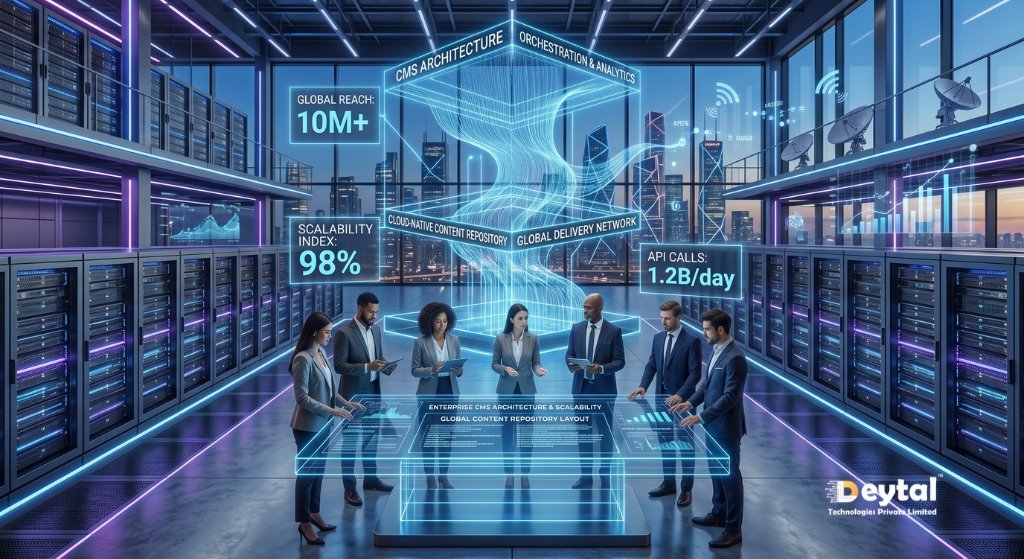
A Headless CMS Architecture decouples the content repository (the backend) from the presentation layer (the frontend), serving content dynamically via APIs to any device or framework with near-instant performance.
The Hidden Bottlenecks of Monolithic CMS Platforms
Continuing to rely on legacy, tightly coupled content systems introduces significant structural limitations:
- Sluggish Load Times & Plugin Bloat: Heavy theme scripts, excessive plugins, and dynamic server-side page builds hurt Google’s Core Web Vitals.
- Single Channel Restriction: Monolithic systems are built primarily for traditional web browsers, making it difficult to push content to mobile apps, smart displays, or internal portals.
- Expanded Security Attack Surfaces: Direct exposure of database-driven CMS admin panels to the public web increases vulnerability to brute force and SQL injection attacks.
- Rigid Developer Constraints: Frontend developers are locked into specific templating engines instead of using modern frameworks like React, Next.js, or Vue.
Monolithic CMS vs. Decoupled Headless CMS Architecture
| Feature / Metric | Traditional Monolithic CMS | Modern Headless CMS |
| Frontend Flexibility | Locked to predefined themes & templates | 100% freedom using React, Next.js, Vue, or mobile SDKs |
| Content Delivery | HTML generated on each page request | Global edge delivery via fast GraphQL or REST APIs |
| Security Risk | High (Admin and public frontend share one server) | Low (Backend is fully isolated and headless) |
| Multi-Device Support | Requires heavy custom rework or duplication | Write once, publish across web, mobile apps, and kiosks |
| Core Web Vitals | Prone to slow Time to First Byte (TTFB) | Sub-second edge caching with static site generation (SSG) |
Strategic Pillars for Implementing Headless Web Platforms
1. Modular API Pipelines & Microservices Architecture
Connect your decoupled backend to modern serverless edge networks. Structuring custom API gateways and resilient database adapters via Custom Software Development Services ensures smooth, real-time data orchestration.
2. Intuitive, Custom Editorial Dashboards
Content editors should not need to understand code to publish. Crafting clean, accessible editorial workflows, live preview engines, and content modeling layouts through UI/UX Design Services keeps marketing teams fast and agile.
3. Omnichannel Native Mobile App Integration
Deliver dynamic content updates straight to mobile users without requiring app store updates. Powering iOS and Android experiences from a single headless API with Mobile App Development Services guarantees uniform branding across touchpoints.
4. High-Performance, Secure Web Development
Maximize page performance and security by decoupling your frontend. Building modern static-rendered web frontends using Website Development Services ensures your digital assets stay secure and responsive under heavy traffic spikes.
5. Headless WordPress & Technical SEO Optimization
Retain the user-friendly publishing interface of WordPress while serving static, high-speed frontends. Combining Decoupled WordPress with specialized WordPress Development Services and technical SEO Services secures top-tier organic rankings and lightning-fast load times.
6. Automated Growth & Dynamic Campaign Funnels
Deploy high-converting landing pages dynamically without altering backend code. Fuel your sales pipeline with agile performance marketing funnels managed by Digital Marketing Services.
Build Future-Ready Headless Platforms with Deytal Technologies
Migrating to a headless architecture requires seasoned full-stack engineering, secure API integrations, and intuitive UX planning. Deytal Technologies Pvt. Ltd. designs and develops custom headless CMS systems, API-driven web architectures, and scalable cloud platforms engineered for commercial growth.
Frequently Asked Questions (FAQ)
Q1: Can we use WordPress as a Headless CMS?
Yes. Headless WordPress uses the WordPress core as a content management backend while using the WP REST API or WPGraphQL to push content directly to modern frontends like Next.js or Nuxt.js.
Q2: Does migrating to a headless CMS help improve Core Web Vitals?
Yes. Because headless frontends are pre-rendered into lightweight static HTML/CSS files and served via global Content Delivery Networks (CDNs), server response times (TTFB) and layout shifts are drastically reduced.
Q3: Is a headless CMS suitable for e-commerce platforms?
Yes. Headless commerce decouples the shopping cart and checkout engines (such as Shopify or WooCommerce) from the storefront, allowing for custom product interactions and instant mobile checkouts.