

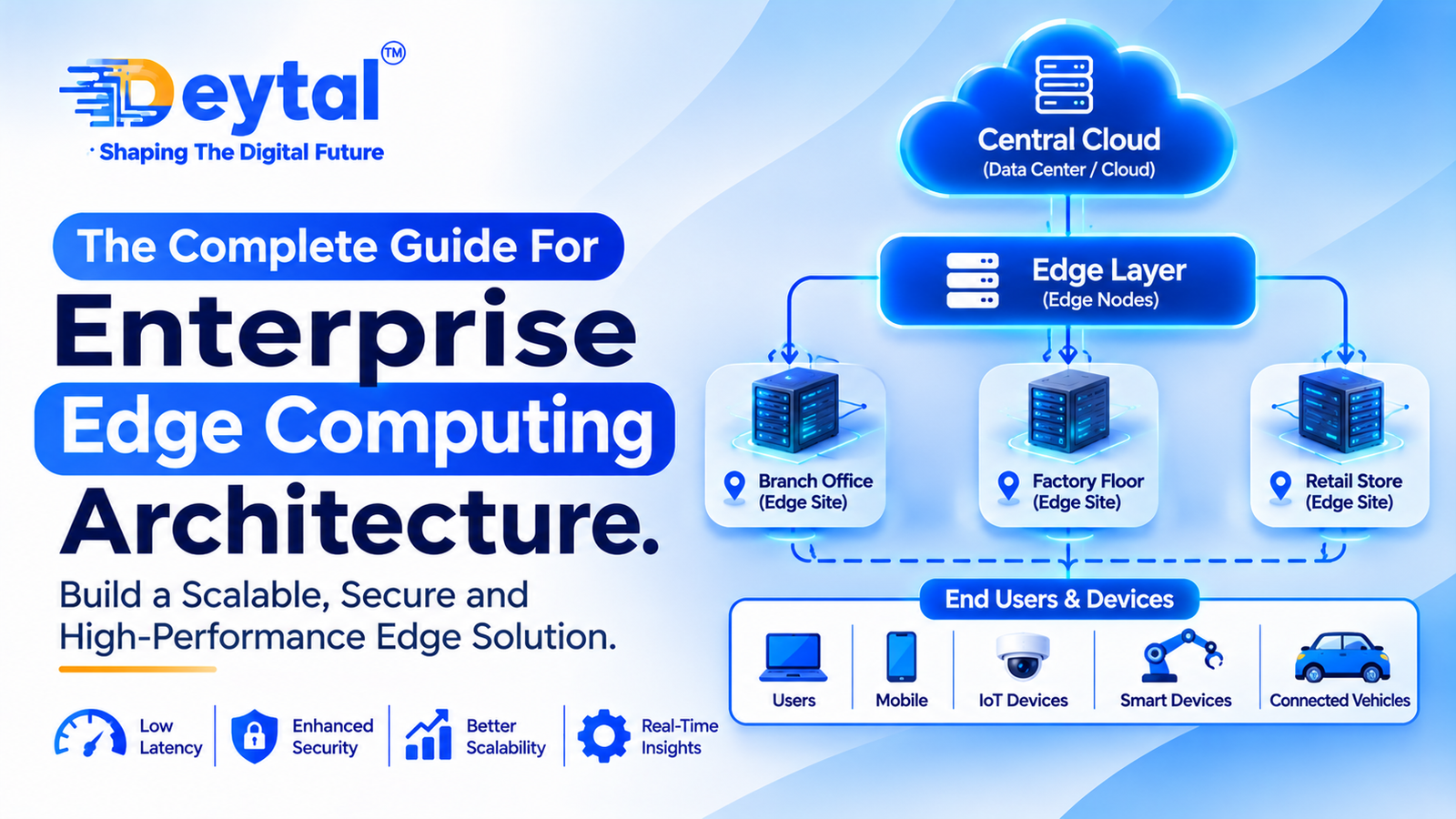
Centralized cloud computing transformed software delivery by pooling compute and storage into massive regional data centers managed by AWS, Azure, and Google Cloud. However, as web applications evolved into globally distributed, latency-critical systems, routing every API call and user interaction back to a single origin region (such as us-east-1 in Virginia) introduced fundamental physical limitations: the speed of light through fiber-optic cables. For a user in Mumbai or Tokyo accessing an application hosted in North America, network latency alone adds 150ms to 250ms of round-trip time before a single line of backend business logic executes.
Enterprise Edge Computing Architecture shifts dynamic computation away from distant centralized regions and embeds it directly into hundreds of points of presence (PoPs) at the network perimeter. By leveraging lightweight V8 isolate runtimes—popularized by platforms like Cloudflare Workers, Fastly Compute, and Vercel Edge Functions—alongside distributed edge key-value stores and globally replicated data caches, enterprises execute business logic, authentication handshakes, and personalization within single-digit milliseconds of the end user.
The Latency Penalties of Centralized Cloud Topologies
Relying strictly on centralized cloud origins for dynamic execution introduces key operational constraints:
- Sluggish Global Time to First Byte (TTFB): Every uncached request must negotiate multiple TCP handshakes, TLS terminations, and cross-continental hops, directly harming Google Core Web Vitals and degrading conversion rates.
- Cold Start Overheads in Heavy Containers: Traditional serverless platforms (such as AWS Lambda or Google Cloud Functions) boot complete Linux micro-VMs or Docker containers, introducing cold-start delays ranging from several hundred milliseconds to multiple seconds.
- Origin Resource Contention & DDoS Vulnerability: Spikes in global bot traffic or legitimate flash sales flood the central origin cluster, exhausting database connection pools and driving up centralized infrastructure compute bills.
- Geographic Data Sovereignty Friction: Routing personal user payloads across international borders to hit central data centers complicates compliance with strict local regulations such as GDPR, DPDP, and CCPA.
Centralized Cloud Compute vs. Enterprise Edge Serverless
| Architectural Dimension | Centralized Cloud (Containers / VMs / Lambdas) | Enterprise Edge Serverless (V8 Isolates) |
| Execution Proximity | 1 to 3 centralized cloud regions globally | Hundreds of distributed edge PoPs worldwide (<50ms from user) |
| Cold Start Latency | 200ms to 3000ms+ (micro-VM and container boot) | Zero to sub-5ms (lightweight V8 isolate initialization) |
| Memory & CPU Footprint | Heavyweight (hundreds of MBs to GBs per instance) | Ultra-lightweight (tens of MBs per isolate; high density) |
| State & Data Access | Centralized relational databases (low latency only locally) | Edge KV stores, distributed caches, and read-replicas |
| Network & TLS Termination | Terminated at edge, but requests backhauled to origin | Terminated and processed directly at the edge PoP |
| Optimal Use Cases | Heavy data processing, batch jobs, monolithic backends | Auth verification, A/B routing, SSR, API aggregation, bot gating |
Strategic Pillars for Engineering an Enterprise Edge Architecture
1. Isolate-Based Execution & Distributed Edge Handshakes
Deploy lightweight serverless workloads using V8 isolate engines that eliminate cold starts and execute code instantaneously at the edge. Engineering resilient custom edge microservices, JWT authentication gates, and dynamic API proxies through Custom Software Development Services ensures user requests are authenticated and filtered before ever reaching origin infrastructure.
2. Dynamic Edge Rendering & Sub-50ms Web Portals
Deliver dynamic, personalized content without sacrificing Core Web Vitals. Building modern web platforms leveraging Edge Server-Side Rendering (SSR) and edge-stitched hydration via Website Development Services allows web applications to serve customized HTML directly from the nearest regional point of presence with minimal TTFB.
3. Frictionless Edge Configuration & Observability UI/UX Design
Operating code distributed across hundreds of global edge nodes can introduce operational complexity without unified management dashboards. Designing intuitive routing-rule visualizers, deployment rollout monitors, and real-time edge telemetry cockpits via UI/UX Design Services gives engineering leads clear visibility into global request distributions and cache hit ratios.
4. Low-Latency API Routing for Global Mobile Fleets
Mobile applications run on variable cellular networks where re-establishing connections over long physical distances causes dropouts. Deploying intelligent edge reverse-proxies, image optimization pipelines, and regional API aggregation gateways through Mobile App Development Services reduces payload sizes and ensures mobile clients maintain stable connections to nearby edge nodes.
5. Edge Caching Backbones & Organic Search Authority
Search engine algorithms prioritize fast-loading websites with low TTFB and strong Core Web Vitals scores. Pairing high-performance edge caching and headless content delivery via WordPress Development Services with data-backed SEO Services ensures web assets achieve near-instant initial render times, rapid indexing, and top search engine rankings.
6. Edge-Driven A/B Testing & High-Conversion Growth Funnels
Run split tests and personalization campaigns at the edge without the layout shifts and performance flickers common to client-side JavaScript testing tools, maximizing campaign conversions via Digital Marketing Services.
Scale to the Edge with Deytal Technologies
Migrating computational workloads to the edge requires a thoughtful approach to data consistency, edge state synchronization, and intelligent cache invalidation. Deytal Technologies Pvt. Ltd. designs, audits, and builds production-grade edge architectures, distributed serverless runtimes, and high-performance cloud platforms engineered for global reach, sub-50ms latency, and high operational resilience.
Frequently Asked Questions (FAQ)
Q1: How do V8 isolates differ from standard containers in edge computing?
Traditional serverless containers package an entire guest operating system, runtime libraries, and application dependencies, requiring hundreds of megabytes of memory and noticeable boot times (cold starts). V8 isolates run within a single shared operating system process, isolating execution through memory boundaries rather than full virtualization. This enables thousands of isolated tenant workloads to run concurrently, initializing in under 5 milliseconds with minimal memory overhead.
Q2: What workloads are best suited for the edge versus centralized cloud origins?
- Edge Workloads: Lightweight, latency-sensitive tasks such as JWT authentication validation, geo-routing, A/B testing splits, image transformation, header modification, edge caching, and bot mitigation.
- Centralized Origin Workloads: Heavy background data processing, distributed ACID transactions spanning multiple tables, long-running analytics jobs, complex machine learning training, and stateful monolith operations.
Q3: How is state managed when running serverless code at the edge?
Edge platforms use distributed, eventually consistent data stores—such as Cloudflare Workers KV, Fastly KV Store, or edge-replicated databases like Turso (libSQL) and Cloudflare D1. These stores replicate data globally across points of presence, providing microsecond-level reads locally at the edge, while write operations are coordinated asynchronously back to designated primary nodes.
