

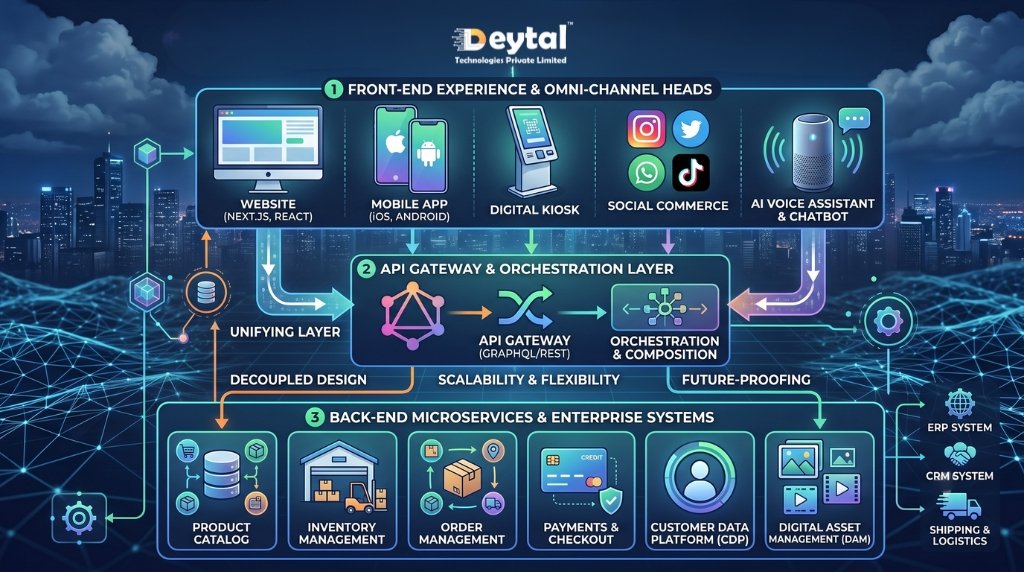
Traditional all-in-one e-commerce platforms couple the frontend presentation layer directly with backend commerce logic, inventory databases, and payment processors. As digital retail expands across mobile apps, social marketplaces, and smart IoT touchpoints, this monolithic structure becomes a bottleneck. Even minor design tweaks require backend adjustments, and bloated templates degrade Core Web Vitals, causing cart abandonment.
A Headless Commerce Architecture decouples the frontend digital storefront (“the head”) from the backend transactional and inventory engine. By bridging both layers using high-speed APIs, enterprise brands gain complete creative freedom, sub-second storefront load times, and true omnichannel agility.
The Bottlenecks of Monolithic E-Commerce Systems
Continuing to operate high-volume online stores on traditional monolithic platforms introduces serious performance hurdles:
- Sluggish Storefront Speeds: Monolithic platforms load heavy legacy scripts, bloated themes, and unnecessary database queries on every page hit, frustrating shoppers and hurting mobile conversions.
- Rigid Front-End Design Constraints: Marketing and UX teams are locked into standard vendor theme templates, restricting custom brand experiences and dynamic product personalization.
- Omnichannel Fragmentation: Serving new channels like native mobile apps, in-store POS systems, or social commerce requires messy standalone workarounds rather than a single unified inventory backend.
- High-Risk Feature Deployments: Modifying storefront layouts or testing conversion flows risks breaking underlying checkout logic, leading to costly unexpected downtime.
Monolithic E-Commerce vs. Headless Commerce Architecture
| E-Commerce Metric | Traditional Monolithic E-Commerce | Modern Headless Commerce |
| Frontend Flexibility | Locked to platform-specific themes | Framework-agnostic (React, Next.js, Vue) |
| Page Speed & TTFB | High Time-to-First-Byte from database load | Sub-second load times via static & edge rendering |
| Omnichannel Deployment | Requires separate setups per channel | Single backend API powers Web, Mobile, and POS |
| Developer Productivity | Coupled teams; slow testing cycles | Frontend & backend teams ship code independently |
| Conversion Optimization | Restricted A/B testing and checkout tweaks | Granular, code-level UX and checkout customization |
Strategic Pillars of a High-Converting Headless E-Commerce System
1. Enterprise API Gateways & Backend Orchestration
Connect transactional commerce engines (Shopify Plus, Magento, or custom microservices) with centralized, high-throughput data layers. Structuring clean API middleware through Custom Software Development Services ensures instant, secure data synchronization across orders, inventory, and payment gateways.
2. Blazing-Fast, Edge-Rendered Storefronts
Deploy modern, lightweight frontend storefronts that load instantaneously anywhere in the world. Building responsive, conversion-focused web stores using Website Development Services ensures near-instant product page loads and stellar Core Web Vitals scores.
3. Frictionless Shopping Experience & UI/UX Design
Conversion rates live and die by intuitive design. Designing frictionless one-click checkout flows, dynamic product visualizers, and interactive cart drawer experiences through UI/UX Design Services drives higher average order values (AOV).
4. Synchronized Native Mobile Commerce Apps
Extend headless endpoints directly to mobile shoppers. Developing responsive shopping apps via Mobile App Development Services guarantees unified carts, biometric checkout, and instant product catalogs across iOS and Android.
5. Decoupled Content Hubs & Technical SEO Authority
Combine rich storytelling with transactional commerce without dragging down site speed. Integrating enterprise WordPress Development Services with proactive SEO Services maintains top organic search authority and rapid indexation for thousands of product SKUs.
6. Omnichannel Lead Capture & High-Yield Performance Marketing
Take advantage of sub-second landing page speeds to maximize return on ad spend (ROAS) across paid campaigns, strategically scaled through Digital Marketing Services.
Scale Your Digital Storefront with Deytal Technologies
Migrating to a headless commerce architecture requires advanced API design, secure payment integrations, and frontend optimization. Deytal Technologies Pvt. Ltd. designs and develops custom headless e-commerce architectures, high-converting digital storefronts, and cloud-native backend systems built to elevate enterprise retail performance.
Frequently Asked Questions (FAQ)
Q1: What platforms can serve as the backend for a headless commerce setup?
Most modern enterprise platforms provide robust headless capabilities via GraphQL or REST APIs, including Shopify Plus, BigCommerce, WooCommerce, commercetools, and custom-built microservices.
Q2: Does headless commerce improve search engine rankings?
Yes. By decoupling the presentation layer and deploying static or server-rendered frameworks (like Next.js), headless storefronts dramatically improve page speed, First Contentful Paint (FCP), and Cumulative Layout Shift (CLS) all critical Google ranking factors.
Q3: Is headless commerce suitable for every online business?
Headless commerce is best suited for growing and enterprise-scale businesses that require bespoke user experiences, high-speed international storefronts, or omnichannel distribution across multiple digital touchpoints.