

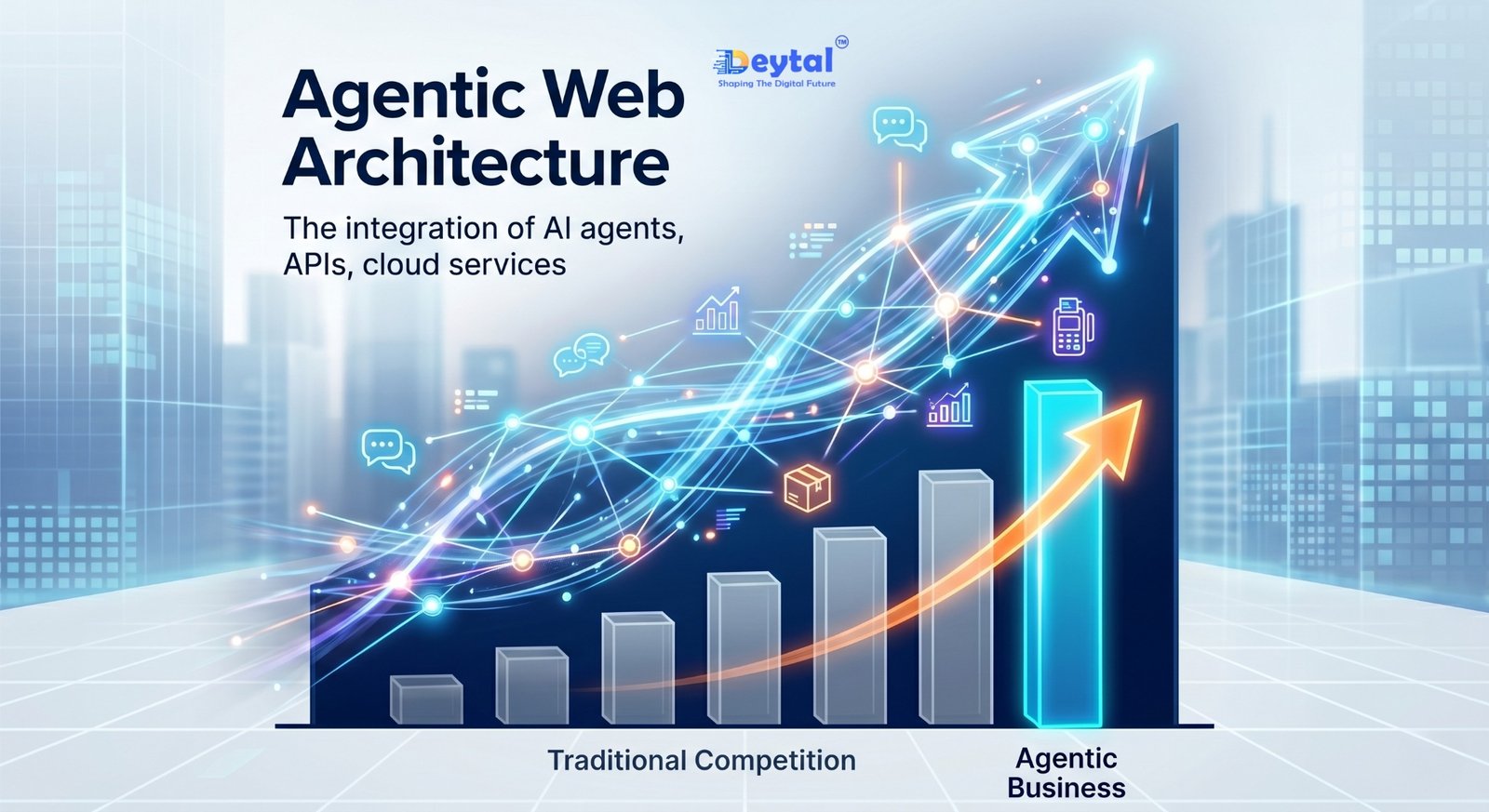
The internet is changing fast. For a long time, companies designed their websites to act just like digital catalogs or simple places to buy things. If a customer wanted to purchase something, they clicked a few buttons. If they had a question, they typed it into a basic chatbot.
Today, the idea of a “modern website” is totally different. We have officially entered the era of the Agentic Web.
For modern businesses, digital strategy is no longer just about making a website mobile-friendly or setting up basic automation those features are now standard table stakes. The real difference-maker is whether your website can actively understand, anticipate, and help users right when they need it.
Whether you manage a corporate website or a growing online storefront, understanding this shift is critical to keeping your business competitive.
What is the Agentic Web?
In modern web development, we are moving away from simply writing rigid code toward building platforms that truly understand user intent. Traditional websites are reactive—they only do exactly what a user manually tells them to do.
In contrast, the Agentic Web uses intelligent software layers that can reason, predict what a user needs, and take action to assist them in real time.
For example, when a customer searches for something on an agentic website, the platform dynamically adapts its layout, recommendations, and navigation to help them find it faster. It does this instantly by analyzing the user’s real-time actions, past behavior, and immediate search goals.
The Technical Change: Why Legacy Websites Get Stuck
To keep up with these trends, many companies try to patch advanced features onto their existing platforms by stacking multiple third-party plugins and extra tools. Without expert engineering, this quick-fix approach creates serious technical bottlenecks:
- The Speed Penalty: High-performance features require rapid data processing. Stacking too many unoptimized tools bogs down your performance. In e-commerce, user retention is deeply tied to speed—even a one-second delay can cause a massive drop in customer conversions.
- Data Silos: True personalization requires a website’s frontend to communicate instantly with its backend databases, CRM systems, and payment logs. Standard website templates are rarely built to handle these complex integrations seamlessly.
- Security Vulnerabilities: Relying on a patchwork of external plugins opens up critical security loopholes, exposing your business and your customers to data compliance risks.
Building a Digital Foundation That Works for Your Business
To build a website that actively drives business growth, you cannot rely on generic shortcuts. You need a solid technical foundation engineered by experts who know how to optimize code for speed, security, and scale.
Depending on your business model, your core digital infrastructure should be built around one of three major engineering pillars:
1. Custom Code & Bespoke Web Development
When your business requires proprietary workflows, unique user experiences, or complex data architectures, building a website from scratch with custom code (such as custom PHP frameworks) is the gold standard. A bespoke build ensures your digital asset is completely secure, extraordinarily fast, and unconstrained by the limits of a template.
2. Global E-Commerce Engineering with Shopify
For online retail brands looking to scale across borders, your storefront must load instantly worldwide and handle international payment gateways flawlessly. High-performance Shopify development ensures your checkout funnels, catalog syncing, and third-party APIs are streamlined for high volume and global transactions.
3. Optimized Enterprise Platforms with WordPress
WordPress powers a massive portion of the web, making it an incredibly flexible tool for content and business management. However, a truly elite website requires expert WordPress development. Custom-coding your themes, optimizing the core codebase, and configuring lightweight e-commerce structures allows you to maintain extreme speed while scaling your features.
The Bottom Line: Don’t Just Build a Website, Build an Ecosystem
If you want your business to grow, your digital infrastructure must be able to grow with it. Relying strictly on basic, off-the-shelf tools will eventually cause your platform to hit an architectural ceiling.
To win in the era of the smart web, you need experienced engineers who can transform your website into an intelligent, high-converting ecosystem.
Is your website built to scale for the future?
At Deytal Technology Pvt. Ltd., we engineer high-performance digital solutions that drive measurable business growth. From global Shopify and WooCommerce storefronts to robust WordPress systems and custom-coded applications, our engineering team builds tailored architectures designed to scale.