

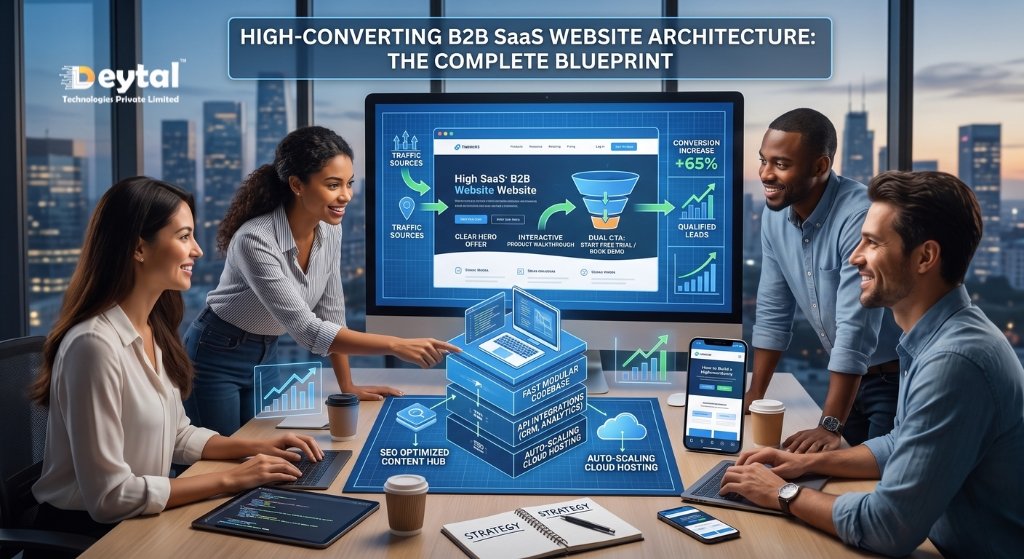
Most B2B SaaS companies do not suffer from a lack of traffic they struggle with a conversion bottleneck. When potential enterprise buyers land on a website, complex jargon, slow load speeds, and rigid multi-step forms create friction that drives high-intent decision-makers toward competitors.
A high-converting SaaS web platform requires a deliberate technical architecture that combines lightning-fast page delivery, interactive product previews, and frictionless conversion funnels.
The Hidden Bottlenecks in Traditional B2B SaaS Websites
Enterprise buyers evaluate software platforms quickly. Outdated site structures consistently hurt lead generation:
- Vague Value Messaging Above the Fold: Generic buzzwords fail to explain what the product does and who it serves within the crucial first 5 to 10 seconds.
- Buried Product Visuals: Forcing visitors behind gatekept demo request forms without interactive product previews or dashboard tours increases drop-offs.
- High-Friction Lead Capture: Demanding 10+ required fields on discovery forms triggers form-submission anxiety, reducing sign-up rates.
- Rigid Monolithic CMS Stacks: Marketing teams struggle to deploy targeted landing pages or run A/B tests when every minor adjustment requires a developer sprint.
Standard Corporate Sites vs. High-Conversion SaaS Architecture
| Architecture Factor | Standard Corporate Website | High-Conversion SaaS Web Platform |
| Primary Conversion Focus | Generic contact forms & phone inquiries | Dual CTAs (Instant Self-Serve Trial + Enterprise Demo Booking) |
| Product Visualization | Static stock images & text lists | Interactive UI walkthroughs, live product sandboxes, and video tours |
| Page Speed & Core Web Vitals | Prone to template bloat & slow JS | Edge-cached static generation with sub-second page transitions |
| Funnel Dynamic Personalization | Static one-size-fits-all pages | Role-based landing paths dynamically tailored by industry and persona |
| Data Integration | Disconnected basic web analytics | Direct bi-directional sync with CRMs, analytics, and marketing automation |
Strategic Architectural Pillars for SaaS Conversion Growth
1. Product-Led UI/UX Design & Transparent Workflows
Modern B2B buyers want to see the product before scheduling a sales call. Crafting clear visual hierarchies, micro-interactions, and transparent feature breakdowns using professional UI/UX Design Services removes friction and accelerates the sales cycle.
2. Modular, Scalable Custom Backend Architecture
Enable rapid deployment of modular landing pages, API integrations, and customized user portals by engineering clean, scalable backends through Custom Software Development Services.
3. Frictionless Native Mobile App Extensions
Enterprise buyers and teams frequently evaluate platforms on mobile devices. Extending web SaaS platforms into responsive mobile products via dedicated Mobile App Development Services ensures consistent user retention across every device.
4. High-Performance, Secure Web Infrastructure
Page speed directly correlates with conversion rates. Building lightweight, custom-coded web architectures through bespoke Website Development Services ensures your platform easily passes Google’s Core Web Vitals while safeguarding enterprise user data.
5. Search Intent Architecture & Mid-Funnel SEO
Capture enterprise decision-makers at every stage of the buying journey. Pairing clean content structures with technical SEO Services and agile WordPress Development Services allows content teams to dominate competitive commercial keywords.
6. Automated Multi-Channel Lead Acquisition
Drive high-intent enterprise visitors straight into your optimized conversion funnels through targeted campaigns powered by data-driven Digital Marketing Services.
Scale Your SaaS Platform with Deytal Technologies
Turning digital traffic into enterprise revenue requires engineering precision, strategic UX design, and scalable infrastructure. Deytal Technologies Pvt. Ltd. designs and builds high-converting SaaS web applications, custom API integrations, and scalable digital platforms built for long-term growth.
Frequently Asked Questions (FAQ)
Q1: What is a dual-CTA strategy in SaaS web design?
A dual-CTA strategy accommodates different buyer readiness levels by offering a low-friction option (such as “Start Free Trial” or “Interactive Demo”) alongside a direct enterprise action (such as “Book a Strategy Call”).
Q2: How does page load speed affect B2B SaaS conversion rates?
Every 1-second delay in page load time can reduce conversion rates by up to 7%. Fast-loading architectures keep enterprise buyers engaged and prevent them from abandoning the site during evaluation.
Q3: Should SaaS companies use a custom web architecture instead of pre-made templates?
Yes. Custom web architecture eliminates bloated third-party code, allows seamless integration with CRM and analytics tools, and enables dynamic, fast-loading landing pages tailored to specific buyer personas.